 Chania Crawford
Q: Name, Major/Minor, and class standing Tanner Poe, Public Relations Major, Junior Q: What made you decide to take up PR as your major or minor? I decided to take up PR as my major because of how it combines the logical and creative sides of my brain. I love how in PR you have to both think strategically about how to achieve your goals and then you get to have fun with how you achieve those goals through your tactics. Q: Favorite song or artist? My favorite artist is Taylor Swift. I’ve loved her for as long as I can remember, and I even got to see her concert over the summer. Q: What made you decide to join PRSSA, and how long have you been a member? I decided to join PRSSA because of all the events and opportunities it brings. I also love all the people in PRSSA, and it’s so fun to hang out with them at the meetings. Q: What’s your go-to comfort food? My go-to comfort food is definitely mac and cheese. Q: What has been your favorite part about being a part of PRSSA? My favorite part about being a PRSSA member was going to student day. It was so fun to go to that with friends from PRSSA and it was also so amazing to get to hear from PR professionals about their work. We also got to network with PR professionals, which was so helpful to hear about what they do at the companies that they work for. Q: What is something you know now about Public Relations that you wish you knew before? I wish I had known how thoughtful PR is before I started PR. Before starting the major I never realized how much thought is put into the final product of a PR plan. Q: Have you had an internship yet? I have had an internship! I didn’t do it for credit, but this past summer I was able to intern at a nonprofit in Richmond, VA, which is near my hometown. Q: What are you hoping to do with your degree when you graduate? After graduation, I hope to go into the nonprofit sector of public relations. Q: Favorite color or colors? My favorite color is lavender. Q: what does belonging mean to you? Belong to me means that people feel at ease and comfortable and that well, they feel like they belong. I think it’s so important to create a warm and welcoming environment for people where they can feel comfortable being themselves without the fear of being judged.
0 Comments
 Chania Crawford
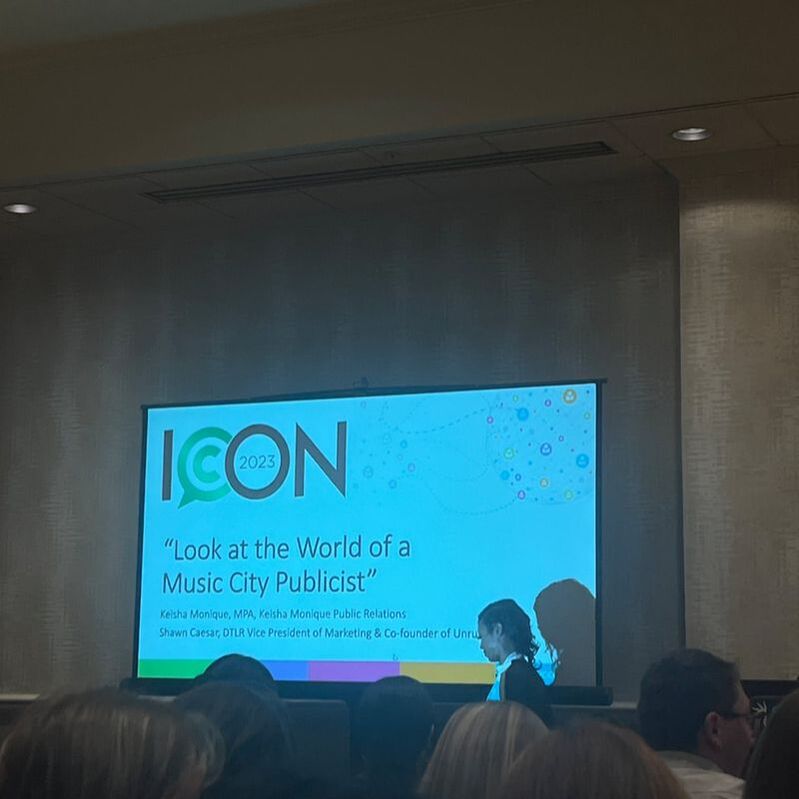
On Saturday, October 14, Keisha Monique, founder of Keisha Monique's public relations and marketing firm, along with Shawn Caesar, vice president of marketing at DTLR, a large urban retailer with stores across the country, spoke to students about what to expect when working in the music industry with artists, record labels and more. Monique and Caesar have worked with various artists such as DJ Quicksilva, Megan Thee Stallion and Jack Harlow to help develop themselves as artists and raise awareness of their music. “Publicity is absolutely critical,” Monique said. “A PR story is infinitely more effective than a front page ad.” Monique and Caesar both work as a liaison between an artist and their audience; they work as a publicist. Monique outlined some of the roles and responsibilities that are required of a music publicist:
Monique stressed the importance of getting earned media for the artist you represent and how important it is to create a large network. It will get the artist further in their career rather than relying on an ad that can be put out. “It looks much more organic when it comes across as a PR story than a paid ad,” Caesar said. “The difference is really having that organic appeal and approach; it makes all the difference at this level.” A story is more effective when connecting with an audience and an artist's fanbase; you cannot connect with an ad the way you can with a story. Caesar had an in-store event at the DTLR Atlanta location with Jack Harlow to sell his CD, allow him to interact with fans, help him reach streams and raise awareness of his first album Come Home The Kids Miss You. This allowed Harlow and his fans to connect on a personal level and build that relationship between his fans and his image as an artist. Monique and Caesar ended the session with helpful tips and advice for students looking to work in the music industry as public relations professionals:
“You gotta get out there,” Monique said. “You got to build a network."  Macy Rosen
During the “It’s Gen Z’s World, and We’re Living in It” session, Haley Norton, Associate Director, Social & PR at Nebo Agency discussed the perceptions of Gen Z, along with the impressive connection this generation has to the world. Norton provided statistics showing Gen Z is the largest generation in the country and will make up 25% of the workforce by 2025. Perceptions of Gen Z There are many misconceptions about Gen Z from society and older generations. For example, many people think Gen Z doesn't want to work, has short attention spans, struggles with social interactions and expects too much from brands and companies. Although some of these are true, Gen Z also brings a lot to the table. “Gen Z is paving the way for change and there are plenty of positive attributes of Gen Z to combat these perceptions,” Norton said. These positive attributes include caring deeply for others, valuing authenticity, being highly collaborative and being pragmatic. Gen Z’s Role in the Industry Although some generations question the fact that 50% of Gen Z uses social media as a news source on a daily basis, “Seasoned professions are still struggling with new media, but it comes naturally to Gen Z.” Being naturally tech-savvy and knowledgeable in the world of social media creates great opportunities for this generation. Gen Z has the skill sets to shift the industry to where it needs to be. The way people consume news is ever-changing, and each generation brings new and innovative perspectives to the workforce. For Gen Z, it’s social media and technology. The Ebb & Flow of Public Relations & Marketing Public distrust is continually growing, as most people get their news from social media or website platforms nowadays. Norton expressed the importance of media relations but said it does not have to be the only part of PR. She said Nebo Agency is “a human-centered agency built for the digital age.” Meaning her work revolves around anything that falls under the digital PR scope. She covered topics like the PESO Model (Paid, Earned, Shared and Owned), influencer marketing and more. Nortan also said some prefer the PESO Model to be referred to as the SOEP Model to consider the order of importance. This was a very interesting way to apply these principles of PR. Finally, Norton discussed the importance of a company’s digital footprint, and how often they are judged by their websites. Summer Fridays is a brand Norton highlighted during the session. The beauty brand is considered to be the new “it” brand, established in 2018. Summer Fridays was created by two influencers and their website is a source for thought leaders. The company’s social media is engaging, entertaining and informative, according to Norton. Overall, Norton stressed many important topics and shared great advice with students. She discussed the importance of taking meaningful action to communicate with people in many capacities and to create a quality experience with everyone you work with. PR and marketing are becoming more intertwined, so it is important to make sure they understand each other and to hold brands to a high standard.. Lastly, Norton told students to learn to prove their value and work and to know how to report on it. Norton’s reading list, thought leaders to keep up with & newsletter subscriptions: 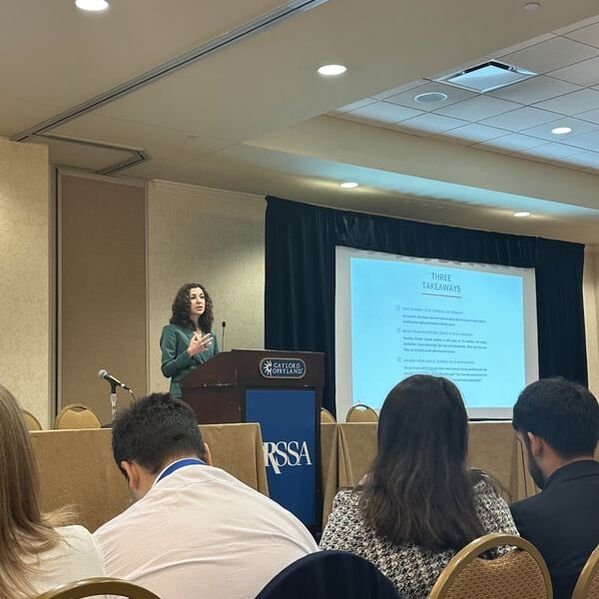 Maddie Goerl
Vice President of Global Employee Communications for Delta Airlines, Gina Laughlin, shared her insights on successfully maintaining strong employee relationships in the airline industry. With captivating stories and impactful career advice, Laughlin inspires young public relations professionals in her PRSSA ICON 2023 Keynote Address. She first discusses how many core aspects have changed in the foundations of public relations. She outlines how quickly the speed of things has changed since the pandemic. She discusses how rapidly society moves post-pandemic and the overload of information with an urgency for the media to receive it. She also discusses the rising trust in business professionals rather than politicians and the rapid spread of misinformation. Although public relations is an ever-changing field, many aspects of public relations have stayed the same. Laughlin states that public relations continue to provide the “strategic counsel” management function that helps guide business outcomes. She also emphasizes the importance of clear, concise, quality writing and fully understanding your audience regarding time, channel and needs. Laughlin urges the importance of brand communications, both internal and external. She suggests that they all relate to one another and, if done correctly, allow for a cohesive brand voice. She states at Delta, “ We are guardians of our employee’s attention, giving them the information they need while helping to shape and maintain our culture by deepening the emotional connection employees have to Delta - our purpose, our leaders and each other.” She stresses the importance of creating a positive work environment that leaves employees feeling well-equipped to succeed. With increased innovation, productivity, and revenue, Delta’s strong employee-centered culture is apparent. With the COVID-19 Pandemic, Laughlin’s efforts for internal communication were imperative to the company and were fundamental to ensuring the safety of employees. She states that during this time, she emphasized the importance of message segmentation and employee feedback. Today, Delta continues to honor its employees in a celebratory and purposeful way by establishing online employee profiles, social media highlights and celebrating accomplishments. Laughlin emphasizes the thorough effort put toward employees by her department at Delta. Laughlin presented a heartwarming video showing the American Idol winner, Iam Tongi. Tongi is the son of a Delta employee and his father, who recently passed away. The video highlighted the immense support Delta offered to the Tongi family during his American Idol journey. This story shows that Delta is action-oriented in assisting its employees during a difficult time and building a strong support system. From maintaining successful internal communications, Laughlin urges the importance of young public relations professionals to stay curious and eager in the industry. She also stresses maintaining solid relationships with public relations professionals, businesses and audiences. She states, “Providing strategic counsel requires a solid grasp of the business and strong relationships. Good relationships take time and intentionality.” Lastly, she urges young professionals to expand their knowledge in any way possible. She emphasizes the importance of expanding your network for various career opportunities. She also asks professionals to ask themselves the questions of “What do I need to know about this topic?” and “Do I have that perspective in my immediate circle?”. Katie Masko
There is a mass shooting in the United States daily. Individuals and communications professionals may find themselves in the middle of one, needing to play a double role in responding to crises. That situation became a reality when a shooter killed three people and injured two others in Greenwood, Indiana. The gunman was only stopped by a “Good Samaritan” with a concealed carry permit. At ICON, Mark Myers, Mayor of Greenwood and two employees from Hirons, a full-service advertising agency, gave insight on what kind of communication is needed after a shooting and how to handle it effectively. The shooting occurred at Greenwood Park Mall on Sunday, July 17, 2022, at 5:56 p.m. Within one minute, the “Good Samaritan” shot the gunman, and local officials cleared the vicinity. The Hirons team was defining the shooting within the hour. Was it a mass shooting? It was. They removed all scheduled social media posts and updated media monitoring terms to track shooting mentions. Multiple command centers came to Greenwood’s side, responding with mutual aid and federal resources. The team began by releasing an initial statement that day and distributing an image for news outlets to run on broadcast and digital. They posted a similar update statement at 9:30 p.m. that night. The following morning, Hirons sent a media alert for an afternoon press conference with the mayor, the city’s police chief and the county coroner. While the Hirons team did a great job at helping the city respond to the shooting, there can be necessary but unforeseen needs for the community when writing a crisis plan. The police chief of Greenwood asked how shoppers would get their belongings back, which hadn’t been considered initially. “This happened in the mall; people were all sitting there eating,” said Mayor Myers.“They didn't think to grab their purses or packages or anything.” This was striking. Within a crisis such as a shooting, many may not think to grab their bags when their life is on the line. The communications teams and crisis management teams needed to quickly set up a way for people to retrieve their belongings and make theft reports if needed. “It really made me think about every aspect of a crisis from a communications perspective,” said ICON attendee and public relations student Macy Rosen. “I would have never thought to set up an item return pickup location.” Shootings are extremely traumatic occurrences, and this case study shows just how critical it is to consider everything. Communications professionals play a fundamental role in keeping the public informed, every detail is vital to ensuring people are equipped with the information they need. Especially when that information can help save lives. |
Archives
February 2024
Categories
All
|
 RSS Feed
